
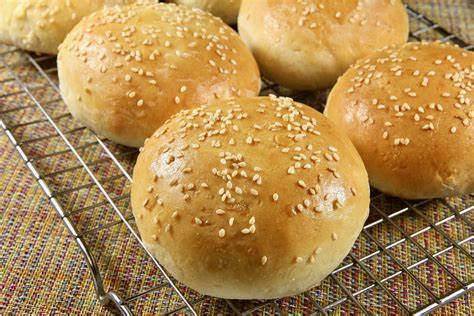
Learn how to make burger buns with my foolproof recipe! Light, fluffy, and so buttery, these homemade hamburger buns will become your go-to for burge
This is the best burger bun recipe for the most perfect soft and fluffy buns. So good, in fact, I may never buy burger buns from the store again. They are pillowy but strong enough to hold your favorite burger with all the fixings.
I know baking bread like this can be intimidating, but as long as you don’t rush the process and follow my easy step-by-step guide, your homemade burger buns will turn out perfectly every time! Just remember that kneading the dough in your stand mixer will take a little time (but the mixer does all of the work for you!), and the dough needs to rise twice. So save this recipe for when you have a few hours to spend in the kitchen. .
Ingredients for Burger Buns

Water — the water should be warm to help activate the yeast, ideally between 10°0F and 110°F. If the water is too cold, the yeast won’t wake up and bloom. If the water is too hot (above 120°F), it can kill the yeast, and the bread won’t ever rise.
Sugar — sugar adds a very subtle sweetness and also provides food for the yeast, helping the bread dough rise.
Yeast — I prefer to use active dry yeast for this recipe (not rapid-rise yeast). Check the package first to make sure your yeast has not expired so the dough rises properly.
Flour — all-purpose works well to create fluffy, light burger buns. You can use bread flour if you want a chewier bun, but you will need to increase the water by 1 to 2 tablespoons.
Butter — unsalted butter enriches the dough for burger buns that have more flavor and won’t dry out too quickly. Use unsalted butter so the rolls don’t end up too salty. The butter needs to be soft to incorporate into the dough properly.
Salt — salt makes all the flavors in the buns pop. Without it, the buns would taste bland and floury. What you might not know is that salt also helps to strengthen the gluten in the dough which helps it hold the gases released by the yeast so the buns have a nice springy texture. Don’t skip it or try to reduce it!
Eggs — you need 1 egg to add richness to the hamburger buns, and 1 for an egg wash to brush on top.
Sesame seeds — while optional, I highly recommend adding sesame seeds for a lovely nutty flavor and crunch.
How To Make Hamburger Buns

1. Activate the yeast in the large bowl of a stand mixer fitted with the dough hook attachment by stirring together the warm water, sugar, and yeast. Let it stand for about 5 minutes or until foamy.
2. To the same bowl, add the flour, butter, salt, and 1 egg.

3. Knead the mixture on medium-low speed for 10 minutes or until the dough is smooth and elastic.
4. Scrape the dough into a ball, and lightly oil the top of the dough and sides of the bowl. Cover the bowl with plastic wrap and let it rise in a warm, draft-free spot until it doubles in size.

5. Punch down the dough and turn it onto a lightly-floured surface. Divide the dough into 8 equal pieces. Pinch the corners of each piece of dough together at the center, then flip over.
6. On a clean surface, cup the ball with your hands and move it in a tight circular motion to shape each bun. This will create a smooth ball. On a large, parchment-lined rimmed baking sheet, place the buns seam-side down. Leave about 3 inches between each bun.

7. Use the palm of your hand to flatten each ball so that it is 3 inches in diameter. Loosely cover the baking sheet with plastic wrap and let the rolls rise once again in a warm, draft-free spot. After 25 minutes of proofing, preheat the oven to 375°F so it is hot when the buns are done with their second rise.
8. In a small bowl, whisk together 1 tablespoon of water and 1 egg to make an egg wash. Brush the tops of the buns with the egg wash, then sprinkle them evenly with sesame seeds if using. Bake for about 15 minutes or until golden brown. Remove the buns from the baking sheet and let them cool completely on a wire rack.

How to Shape Burger Buns
Perfectly shaped burger buns are easier to achieve than you may think. Here’s how to do it:
- After the first rise, divide the dough into 8 equal pieces. For buns that are exactly the same size, you can weigh the dough and divide the weight by 8. Or, you can eyeball it if you don’t have a scale.
- Pinch the corners of each piece together to form a somewhat circular shape. Then, flip the ball over and place it on a clean, unfloured surface. Place your hand around the ball, pinching your middle finger and thumb together, then move your hand around the ball several times in a circular motion, rolling it on the clean surface to form a tight, smooth ball.
- After placing the balls on a baking sheet, gently flatten each burger bun with your palm.
That’s all there is to it! And if the buns don’t turn out perfectly circular on your first (or fourth!) try, don’t worry because their flavor won’t be affected one bit.
Which Yeast is Best to Use for Burger Buns?
I use active dry yeast in this easy burger bun recipe. When working with active dry yeast, make sure the yeast has not expired, or it may not activate, and your buns won’t rise.
You can also use an equal amount of instant yeast. There is no need to activate it; simply add it to the bowl of your stand mixer, skipping the 10-minute blooming time and adding the flour and other ingredients immediately to the bowl. From there, follow the recipe as written, but reduce the rise times by about half. Instant yeast is also called rapid-rise yeast, which, as the name suggests, helps dough rise faster than active dry yeast.
Can You Freeze the Dough Before Baking?
Yes, if you want to prepare the hamburger bun dough in advance, you can freeze it before baking. After the dough completes its first rise and you shape each piece into a bun, you can freeze the dough balls on a parchment paper-lined baking sheet. Cover tightly with plastic wrap and place in the freezer for up to 2 months.
Thaw to room temperature before baking and allow the dough to rise a second time (about 1 hour after it has fully defrosted), then brush with egg wash and bake according to the recipe.

How to Store Burger Buns
Store the cooled buns in an airtight container at room temperature for up to 5 days. To keep them longer, place them in a freezer-safe container and freeze for up to 3 months. Warm them in the oven for a few minutes before serving.
Recipe Tips
- Weigh the flour. Too much flour will ruin homemade burger buns. The most effective way to measure flour is to weigh it with a kitchen scale. If you don’t have one, fluff the flour up in its container, spoon it into a measuring cup, and level off the top with the straight side of a knife.
- Punch down the dough. This is a vital step when making any kind of yeast bread. Punching down the dough helps redistribute the yeast and also helps remove excess air pockets for a more fine crumb. To punch down dough, make a fist and gently push down into the center of the dough after its first rise to deflate it.
- Dough rises best in warm, draft-free spots. Let the dough rise in an area that reaches about 75°F for the best results. You can use your oven on the “bread proof” setting or inside with the light on.
- If using your oven’s proofing setting: Pull the rolls out about 15 to 20 minutes before the proof time is up, begin preheating the oven, and set the baking sheet with the dough balls on the stovetop.
- For a flavorful twist: Use everything bagel seasoning or dried minced onion and poppy seeds in place of sesame seeds. Or, mix black and white sesame seeds together for a colorful variation.

Frequently Asked Questions
Can I knead the dough by hand without a mixer?
I highly recommend using a stand mixer fitted with a dough hook attachment. The dough is quite sticky and needs to be kneaded for quite a while, which can be exhausting by hand. However, you can do it without a mixer if you don’t have one. Knead until the dough is elastic and smooth, which will take about 15 minutes. Lightly dust the dough and your surface with flour as needed.
Can I use Whole Wheat flour?
To give the burger buns a slightly nutty flavor, you can replace some of the all-purpose flour in this recipe with whole wheat flour. Use 3 cups of all-purpose flour and ½ cup of whole wheat flour, and increase the liquid by 1 tablespoon.
Ingredients
- ▢¾ cup warm water (105°F to 110°F), (180mL)
- ▢¼ cup granulated sugar (50g)
- ▢1 (0.25-ounce/7g) envelope active dry yeast
- ▢3½ cups all-purpose flour (420g)
- ▢2 tablespoons unsalted butter softened
- ▢1¼ teaspoons salt
- ▢2 large eggs room temperature, divided (114g)
- ▢1 tablespoon water
- ▢2 teaspoons sesame seeds
Instructions
- In the bowl of a stand mixer fitted with the dough hook attachment, stir together the warm water, sugar, and yeast until combined. Let it stand for about 5 minutes, or until foamy.
- To the same bowl with the yeast mixture, add the flour, butter, salt, and 1 of the eggs. Knead the mixture on medium-low speed for 10 minutes, or until the dough is smooth and elastic.
- Scrape the dough down into a ball, and lightly oil the top of the dough and sides of the bowl. Cover the bowl with plastic wrap and let it rise in a warm, draft-free spot (75°F) until it doubles in size, 1 to 1½ hours.
- Punch down dough and turn it on to a lightly-floured surface. Divide the dough into 8 equal pieces. Pinch the corners of each piece together at the center, then flip them over. On a clean surface, cup the ball with your hands and move it in a tight circular motion to shape each bun. (This will create a tight ball with a smooth top.)
- On a large, parchment-lined, rimmed baking sheet, place the buns seam-side down, about 3 inches apart.
- Using the palm of your hand, flatten each ball to be 3 inches wide. Loosely cover the baking sheet with plastic wrap and let the rolls rise in a warm, draft-free spot (75°F) until visibly puffed, 45 minutes to 1 hour.
- After 25 minutes of proofing, preheat the oven to 375°F.
- Once the rolls have finished rising, in a small bowl, whisk together 1 tablespoon of water and the remaining 1 egg until combined. Brush the tops of the buns with the egg wash, then sprinkle them evenly with the sesame seeds.
- Bake for about 15 minutes or until golden brown. Remove the buns from the baking sheet and let them cool completely on a wire rack, for about 30 minutes.
Notes
- Weigh the flour. Too much flour will ruin homemade burger buns. The most effective way to measure flour is to weigh it with a kitchen scale. If you don’t have one, fluff the flour up in its container, spoon it into a measuring cup, and level off the top with the straight side of a knife.
- Punch down the dough. This is a vital step when making any kind of yeast bread. Punching down the dough helps redistribute the yeast and also helps remove excess air pockets for a more fine crumb. To punch down dough, make a fist and gently push down into the center of the dough after its first rise to deflate it.
- Dough rises best in warm, draft-free spots. Let the dough rise in an area that reaches about 75°F for the best results. You can use your oven on the “bread proof” setting or inside with the light on.
- If using your oven’s proofing setting: Pull the rolls out about 15 to 20 minutes before the proof time is up, begin preheating the oven, and set the baking sheet with the dough balls on the stovetop.
- For a flavorful twist: Use everything bagel seasoning or dried minced onion and poppy seeds in place of sesame seeds. Or, mix black and white sesame seeds together for a colorful variation.
Easy and tasty no need to buy buns